Indian Sesame Seeds: Production, Varieties & Export Guide
India is one of the important origins for sesame seeds, supplying markets across Asia, the Middle East, Europe and other parts of the world. Indian sesame is widely used in bakery and confectionery, tahini, snacks, edible oils and various food-processing applications.
For global buyers, understanding India's sesame-growing regions, varieties and quality parameters is important when sourcing the commodity in bulk.
India’s Sesame Seed Industry
Sesame is cultivated across several agricultural regions of India, benefiting from the country's diverse climate and growing conditions.
Major sesame-producing states include Rajasthan, Gujarat, Madhya Pradesh, Uttar Pradesh, Maharashtra, Andhra Pradesh and Telangana.
This geographical spread creates a broad sourcing base for exporters and traders. Sesame moves through an established supply chain from farms and local markets to cleaning, sorting, grading and packing facilities before reaching domestic and international buyers.
Major Types of Indian Sesame
Indian sesame is available in different varieties and processing forms depending on the intended application.
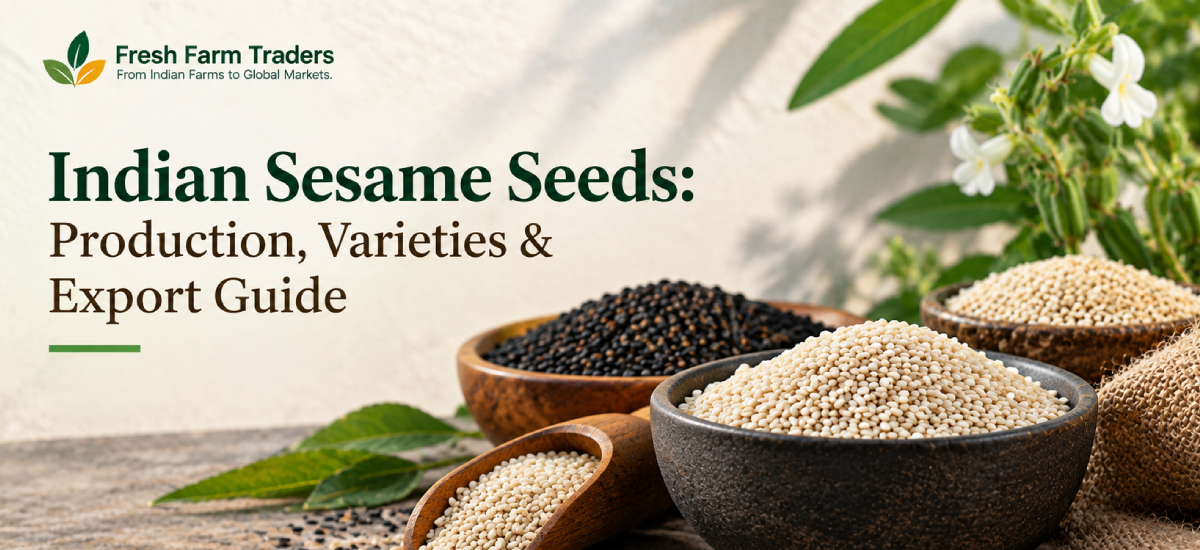
White Sesame Seeds are widely used in bakery products, confectionery, tahini, snacks and food manufacturing.
Black Sesame Seeds are valued for their distinctive colour and flavour and are increasingly used in specialty foods and traditional preparations.
Natural Sesame Seeds retain their outer skin and are commonly supplied for food processing and oil extraction.
Hulled Sesame Seeds have their outer skin removed through processing and are preferred for applications requiring a lighter appearance and specific processing characteristics.
The exact specification can vary by origin, crop and buyer requirement, making clear product specifications essential before procurement.
Where Is Sesame Grown in India?
India's sesame cultivation is distributed across multiple states.
Rajasthan is an important sesame-growing and trading region, while Gujarat and Madhya Pradesh also have significant production areas. Sesame is also cultivated in parts of Uttar Pradesh, Maharashtra, Andhra Pradesh and Telangana.
For bulk buyers, a multi-region sourcing network can provide greater flexibility in managing seasonal availability and procurement requirements.
What Determines Sesame Quality?
When buying sesame internationally, product name alone is not enough. Buyers should clearly define the required specification.
Important parameters can include:
- Purity
- Moisture
- Foreign matter
- Seed colour and size
- Oil content
- Damaged or immature seeds
- Microbiological parameters
- Pesticide residue requirements
The required specification will depend on the final application and destination market.
Why Source Sesame From India?
India offers buyers a combination of a large agricultural base, multiple growing regions and an established sesame trading and processing ecosystem.
The availability of different varieties and processing options allows buyers to source according to their application, quantity and quality requirements.
Indian suppliers can also provide processes such as cleaning, de-stoning, sorting, grading and packing, helping prepare sesame according to agreed commercial specifications.
Sourcing Indian Sesame With Fresh Farm Traders
At Fresh Farm Traders, sesame is sourced through an agricultural network connected with 2,500+ farmers across multiple regions of India.
Our sourcing system combines farmer relationships, Internal Cluster Systems (ICS) and multi-state procurement with in-house capabilities for cleaning, de-stoning, sorting and grinding.
We work with bulk buyers looking for Indian agricultural products according to their required specifications, quantities and packaging.
For requirements of white sesame, black sesame or other Indian sesame specifications, Fresh Farm Traders can discuss sourcing, processing, packaging and bulk supply requirements.